

This article originally appeared in Forbes.
Language has long been the bedrock of our human world; it’s the collective operating system that powers the way we think, feel, interact and make sense of our surroundings. But with the rapid advancements in artificial intelligence (AI), language has also become a crucial interface bridging the gap between humans and machines. Particularly in the HR sector, this evolution comes with both significant opportunities and challenges.
Generative AI, designed to create content that mirrors humanlike patterns of speech and writing, is already beginning to transform HR operations. Leveraged responsibly, it has the power to augment the employee and candidate experience significantly, specifically enabling organizations to identify, attract and retain the best talent effectively while also supporting diverse workforce growth. Conversely, misuse or misunderstanding of these tools can lead to significant pitfalls, from spreading misinformation to challenging trust, authenticity and identity altogether.
The Promise Of Generative AI In HR
Firstly, let’s consider the potential benefits. Generative AI offers unprecedented efficiency and accuracy and can enable the automation of routine HR tasks like screening résumés, answering frequently asked questions and scheduling interviews. This automation not only saves HR professionals’ valuable time but also minimizes the risk of human error, enhancing the fairness and accuracy of these processes.
Organizations are increasingly taking advantage of generative AI for these specific action items in the pre-employment phase. In a recent Littler study, among respondents whose organizations said they are deploying AI and data analytics in workforce management, nearly 70% reported using AI and analytics tools in the recruiting and hiring process.
Secondly, generative AI is a potent tool for improved decision-making. By analyzing patterns and predicting trends, it can generate actionable insights to empower more informed HR decisions. For instance, a generative AI solution could help identify which candidates are most likely to excel in specific roles or flag employees who might be on the verge of seeking new opportunities.
Lastly, generative AI can personalize the HR experience. By understanding individual preferences and needs, it can tailor communications and recommendations, offering a more customized, engaging experience for employees and candidates alike.
The Perils Of Generative AI In HR
However, the advent of generative AI in HR is not without its hazards, most notably the significant risk of misinformation. So concerning is this risk that according to Gartner, by 2027, 80% of enterprise marketers will establish a dedicated content authenticity function to combat misinformation and fake material.
In HR, for example, this could mean an AI system inadvertently disseminates incorrect or outdated information about a company’s policies or job roles, leading to a ripple effect of confusion and potentially serious legal complications.
In addition, bias remains a thorny issue. AI models learn from existing data, which may unintentionally reflect historical biases. Without careful management, these AI systems have the potential to perpetuate these biases, leading to skewed hiring or promotional decisions.
Moreover, privacy and trust are critical concerns. The use of AI in HR often involves collecting and analyzing personal data, which raises privacy questions. As has been emphasized by increasing AI regulations, organizations need to be transparent about their AI usage and take robust measures to protect employee and candidate data.
Lastly, the issue of authenticity and identity cannot be ignored. The line between human and machine interactions becomes blurry with AI. If a candidate interacts with a generative AI system during the recruitment process, they may question whether their responses are genuinely understood or valued. Again, the onus is on the organization to quell these concerns as part of transparent candidate communications.
Navigating The AI Landscape In HR
As we traverse this new landscape, it’s essential to use generative AI tools in HR responsibly. Transparency, fairness and privacy should be the cornerstones of any AI implementation strategy. It’s also crucial to recognize that AI does not make for a “set it and forget it” scenario. Organizations must continually monitor and adjust AI systems to prevent the potential spread of misinformation and the unintended perpetuation of bias.
The future of HR is undeniably intertwined with generative AI. Despite its many benefits, there is still no substitute for the human touch, especially in a field as people-centric as HR.
As we integrate these powerful tools into our HR practices, we must do so with our eyes wide open, keeping in mind that AI should augment human capabilities, not replace them. Maintaining this balance is key to harnessing the promise of AI while avoiding its perils.
retrain.ai is a Talent Intelligence Platform designed to help enterprises hire, retain, and develop their workforce, intelligently. Leveraging Responsible AI and the industry’s largest skills taxonomy, enterprises unlock talent insights and optimize their workforce effectively to hire the right people, keep them longer and cultivate a successful skills-based organization. retrain.ai fuels Talent Acquisition, Talent Management and Skills Architecture all in one, data-driven solution. To see retrain.ai in action, book a demo.




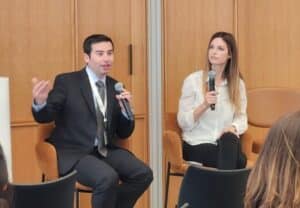 Starting off the day, keynote speaker Commissioner Keith Sonderling of the EEOC shared insights on the expansion of Responsible AI governance across the U.S., emphasizing that current regulations put the onus on businesses using AI systems to ensure they generate fair end results–
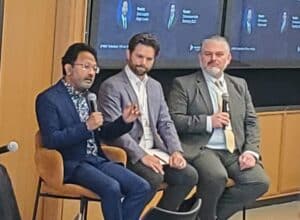 Talk of Responsible AI continued into the first panel
 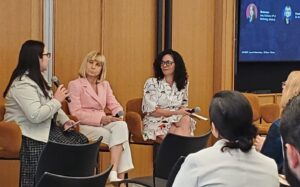 In conversation with retrain.ai’s Amy DeCicco, Dr. Anna Tavis of the Human Capital Management Department at New York University and Dr. Yustina Saleh from The Burning Glass Institute posed provocative questions, encouraging attendees to think about questions like whether empathy is truly a skill or a trait, or how HR leaders can tell from a skills profile whether or not a candidate will be able to do the job needed.
 With more enterprises talking about transforming to an SBO model, Dr. Sandra Loughlin of EPAM Systems shared lessons learned from her company’s transformation, while Heidi Ramirez-Perloff discussed The Estee Lauder Company’s exploration into SBO strategy. Urmi Majithia of Atlassian delved into executing technology to help overcome the challenges of becoming an SBO, and Ben Eubanks of Lighthouse Research &
  Following the panel discussion, Dr. Loughlin sat down for a one-on-one with retrain.ai CEO Dr. Shay David to go more in depth into EPAM’s experience developing a thriving SBO strategy, sharing benefits, pitfalls and lessons learned along the way.
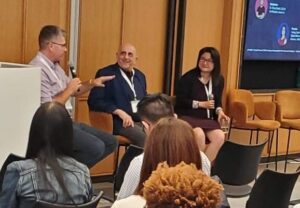 No discussion around Responsible HR would be complete without an exploration of the huge impact ChatGPT and other